Two years ago this month, I was diagnosed with invasive pleomorphic lobular carcinoma (IPLC), a rare and aggressive form of breast cancer.
Then came a lumpectomy. Chemotherapy. Radiation. More appointments than I could count. Eventually, the strange transition from cancer patient to someone who is NED: no evidence of disease.
Except, as it turns out, you never fully stop being a cancer patient.
A recent scare was a good reminder. Changes had appeared in both breasts, with suspicious striations that were different enough to warrant another look. So I went back for a diagnostic mammogram and ultrasound.
And I was scared to death. Not mildly nervous. Not “I’m sure it will be fine.” Scared. Once you’ve heard the words “you have cancer,” you can’t completely un-hear them.
The good news, and it is very good news, is that everything was fine.
Two years ago, cancer filled almost all the space in my life. Today, it takes up much less. But it hasn’t disappeared.
I’ve written before about the aromatase inhibitor I take daily to reduce the risk of recurrence. Two years in, the hot flashes can still heat a small village, and the aching joints and disrupted sleep haven’t gone away. There’s a strange irony in taking something to protect your future while struggling with what it does to your present. I’m grateful for the science, but gratitude doesn’t make the side effects disappear.
There are still follow-up appointments and scans, and still days when cancer takes time away from work and everything else. And every once in a while, something like this scare brings all the fear rushing back into the room.
I also didn’t expect cancer to stir up other parts of my life. Like most people who have lived several decades (I just turned 75!), I’ve had my share of losses. Some of those wounds have healed. Others, I suspect, were simply tucked away as I got on with living. Cancer has a way of disturbing those carefully packed boxes, and I’m still exploring what that means for me.
All of this brings me back to something I’ve come to understand deeply: illness doesn’t just affect your health. It affects your time, work, family, emotional bandwidth, and potentially your income.
I was fortunate. When cancer arrived, worrying about whether I could financially survive being unable to work didn’t have to be at the top of my list, even while living alone. Not everyone has that security.
That’s why CDIA’s work on disability insurance and income protection feels far less theoretical to me than it once did.
We insure our homes. We insure our cars. We insure our lives. But the asset that pays for almost everything else is our ability to earn income.
If there’s one lesson I understand more clearly two years later, it’s this: You can’t protect yourself from every frightening thing that might happen. But you can protect yourself from facing a health crisis and a financial crisis at the same time.
If your employer offers disability coverage during this fall’s open enrollment, take a few minutes to review it carefully. It may be one of the most important decisions you make.
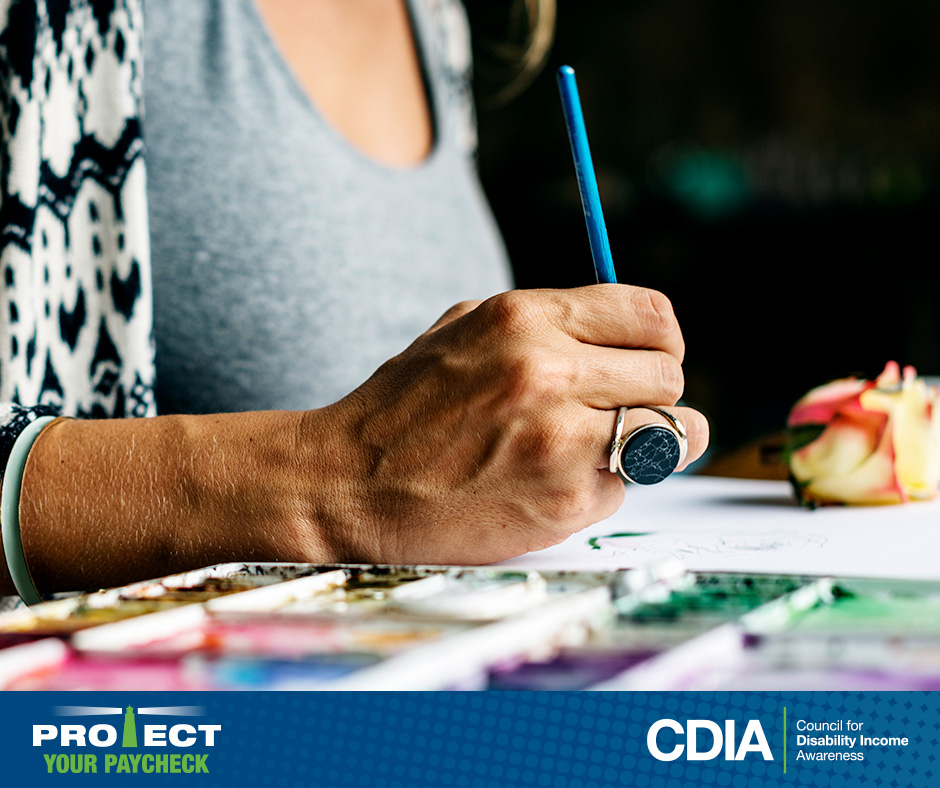
As for me, I’m happy to report that I’m back to simply living my life. Working. Painting watercolors. Walking miles and miles. Spending time with family, especially my adorable grandchildren.
Which, these days, feels pretty damn good.