Have you ever thought about what it would be like to have a medical condition or injury that prevented you from working?
I run The Claim Lab, a small specialist company that analyzes data from disability and workers’ compensation insurers. Our goal is simple: use data to help people recover and get their lives back on track.
We see a wide range of claims—many with complicated, prolonged recoveries. What continues to surprise me is just how significant a role psychological factors play alongside the physical injury or illness.
A Personal Injury
I’ve experienced this firsthand.
I suffered an exercise-related injury—not from overdoing it (no one could ever accuse me of that), but from not stretching enough beforehand.
I strained my piriformis muscle, located near the sciatic nerve at the top of the glute. The inflammation began pressing on the nerve, triggering a chain reaction. Pain radiated down my leg, my knee ached, and the joint felt unstable—as if it wouldn’t properly lock into place.
What struck me most was how debilitating it felt. I became anxious and uncertain with even simple movements, caught off guard by how much such a seemingly minor injury affected me.
And yet, this past winter, we watched Lindsey Vonn race down a mountain with torn knee ligaments—enduring significant pain, no doubt.
It’s a striking reminder: people experience and respond to pain very differently.
The Burden of Pain
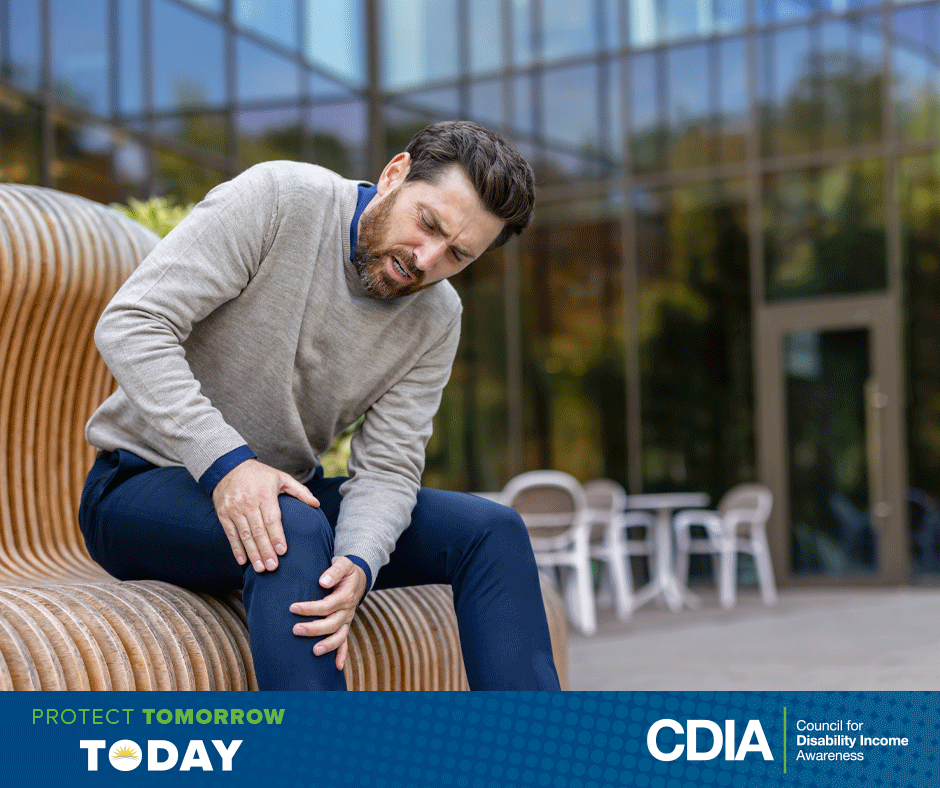
When I looked at our data, I found a similar pattern. A number of long-term claims—open for two years or more—were tied to something as common as knee pain.
Pain is deeply personal. What one person manages, another may find overwhelming.
It doesn’t just affect the body—it impacts mental health, sleep, motivation, and overall resilience. Over time, these effects can compound, leading to anxiety, depression, and a downward spiral that’s difficult to break.
The true burden isn’t just the injury itself, but the psychological and emotional toll that comes with it. And because we can’t predict how any one person will respond, we can’t assume outcomes will be the same.
That uncertainty is exactly why this risk needs to be managed—for our families and for our businesses.
Small Business Investment
As a small business owner, I think about this not just personally, but professionally.
As our company grows, we look for ways to better support our employees. Last year, we introduced group health insurance. This year, we’re adding group disability insurance at a reasonable cost—an investment that also helps us stay competitive by offering meaningful benefits.
If you’re a small employer with growth plans and a desire to retain your team, it’s worth considering.
Because at the end of the day, protecting income isn’t just a benefit—it’s a necessity.